
Hair Tissue Mineral Analysis
Minerals are known as the “spark plugs” of the body. Just like a car needs a “spark” to power the engine, minerals give that spark to your body that makes your cells turn on and run. Pretty powerful if you ask me!
Minerals are responsible for things like:
Immune system support
Maintaining a healthy heartbeat
Managing blood sugar
Stress tolerance
Cognitive function
Energy production
Muscle and nerve function
Fluid balance
Bone building
Hormone signaling
Test, Don't Guess!
Some of the different things that your HTMA will show are:
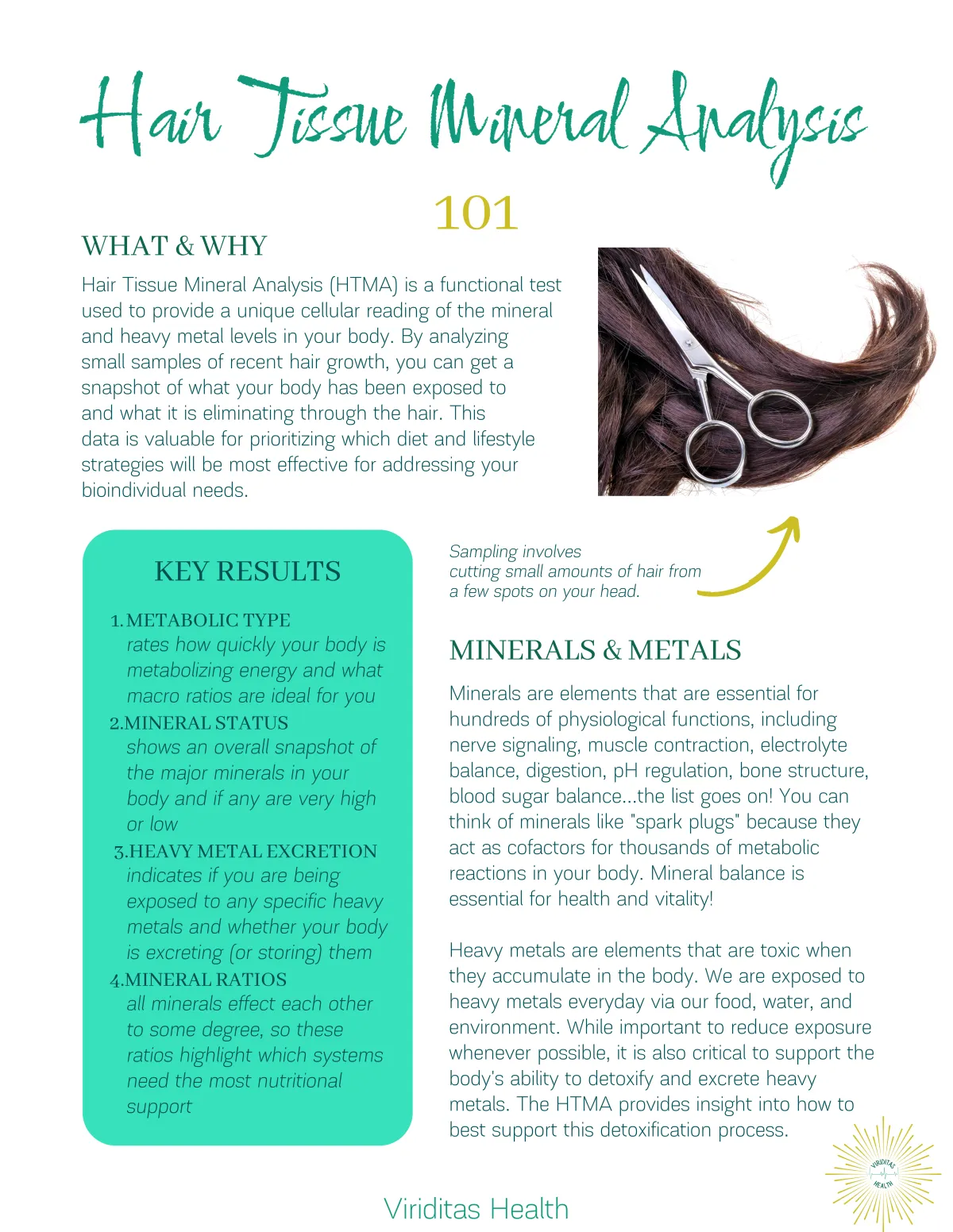
Metabolic Type: this is an indicator of how fast your body is burning through nutrients and will affect your overall dietary recommendations, as well as your recommended Macronutrient balance (Protein, Carbohydrates and Fat).
Single Mineral Levels: These levels are important for cluing us in to what’s going on at the most basic level. We will mainly be focusing on the first 4 minerals (Calcium, Magnesium, Sodium, Potassium), especially on a first test, because they have such a great impact on the other minerals.
Heavy Metals: A good indicator of what your body is/has been exposed to or is working hard to excrete. While we will look at sources of exposure, and occasionally use a binder to help your body eliminate these, the focus on rebalancing your minerals alone will often have a great impact.
Significant Ratios: These ratios, and how each pair of minerals work synergistically together to support certain metabolic processes within the body, is one of the most telling aspects of the HTMA. We can find clues here of issues that may be cropping up, even before symptoms or results on a blood test may show up.
The body is always working to maintain a state of homeostasis. We see this in the way it regulates body temperature, blood sugar, blood pressure, pH levels, hormone levels, emotional states, etc.
Minerals are also designed to be maintained in a state of homeostasis. Homeostasis between minerals is expressed in ratios. This means certain minerals work together (synergistic) or against each other (antagonistic). If they become out of balance, one may deplete or displace another.
Some of the different key ratios will be in your chart. These ratios typically represent (not diagnostic) the following metabolic processes:
Autonomic Ratio (sympathetic vs. parasympathetic)
Vitality Ratio (Na/K pump on every cell)
Thyroid
Hormones
Adrenals
Blood Sugar
Infections + Inflammation
"Minerals are the spark plugs of life."
- Dr Henry Schroeder
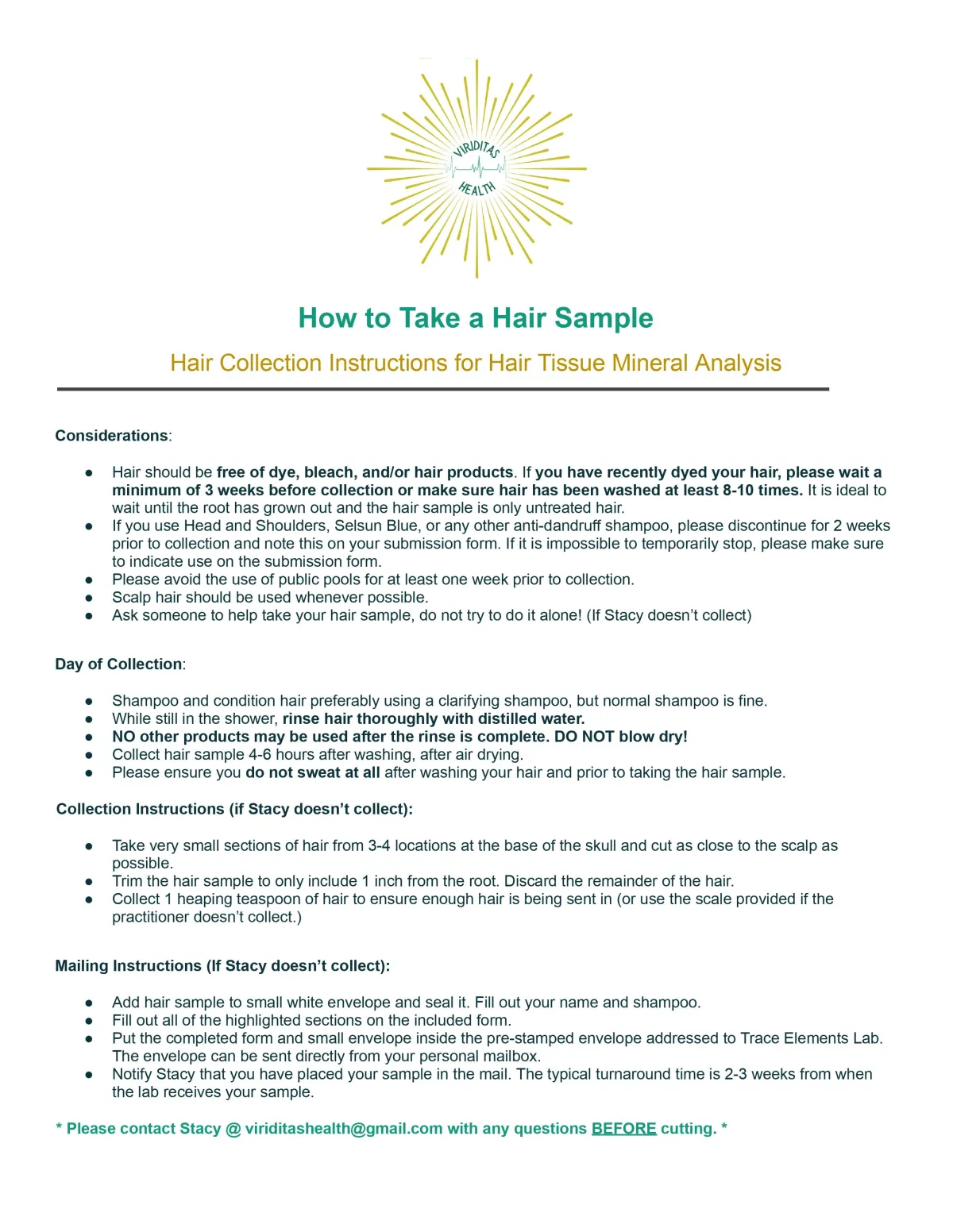
Hair Collection
Interested in the HTMA?
Please contact me.
I will be in touch and will send you out a test collection kit.
Instructions on hair collection are below. For best results, follow them carefully.
Please reach out with any questions before cutting!
“You can trace every sickness, every disease and every ailment to a mineral deficiency.”
- Dr Linus Pauling
Results
Results take 2-3 weeks on average to come in.
Once analyzed, I will schedule a time for you to review them with me. In this visit, we will go over a comprehensive review of your history and symptoms, identify deficiencies and challenges. and partner to create a personalized plan based off of your HTMA test.
While you wait...
Thanks for your patience!
You’re on your way to taking charge of your health!
At Viriditas Health we believe in root-cause care, wholistic wellness, and helping you be made well. While you wait, explore our resources, check your client portal, and get ready to step into vitality.
Click the link below for some action items to move forward with in the meantime!
Use this time wisely and get a headstart on your health.


Viriditas Health LLC
The wholistic health practice and root-cause care offshoot of Live Wholly




NAVIGATE
WORK WITH ME
CUSTOMER CARE
ONLINE
LEGAL
© Copyright 2026 Viriditas Health LLC • ALL RIGHTS RESERVED
❤️🔥 Viriditas Health LLC is consecrated to the Sacred Heart of Jesus ❤️🔥